Anticoagulant (INR) follow-up for community pharmacies, clinics and labs: from the lab result to the dosing calendar.
- Period
- October 2025 – today
- Role
- Founder and lead developer: process analysis, clinical rules, design, code
- Status
- In production, deployed at Uniprix pharmacies
For
Pharmacists, clinic nurses and labs who follow patients on warfarin and adjust their dose against a clinical protocol.
The problem
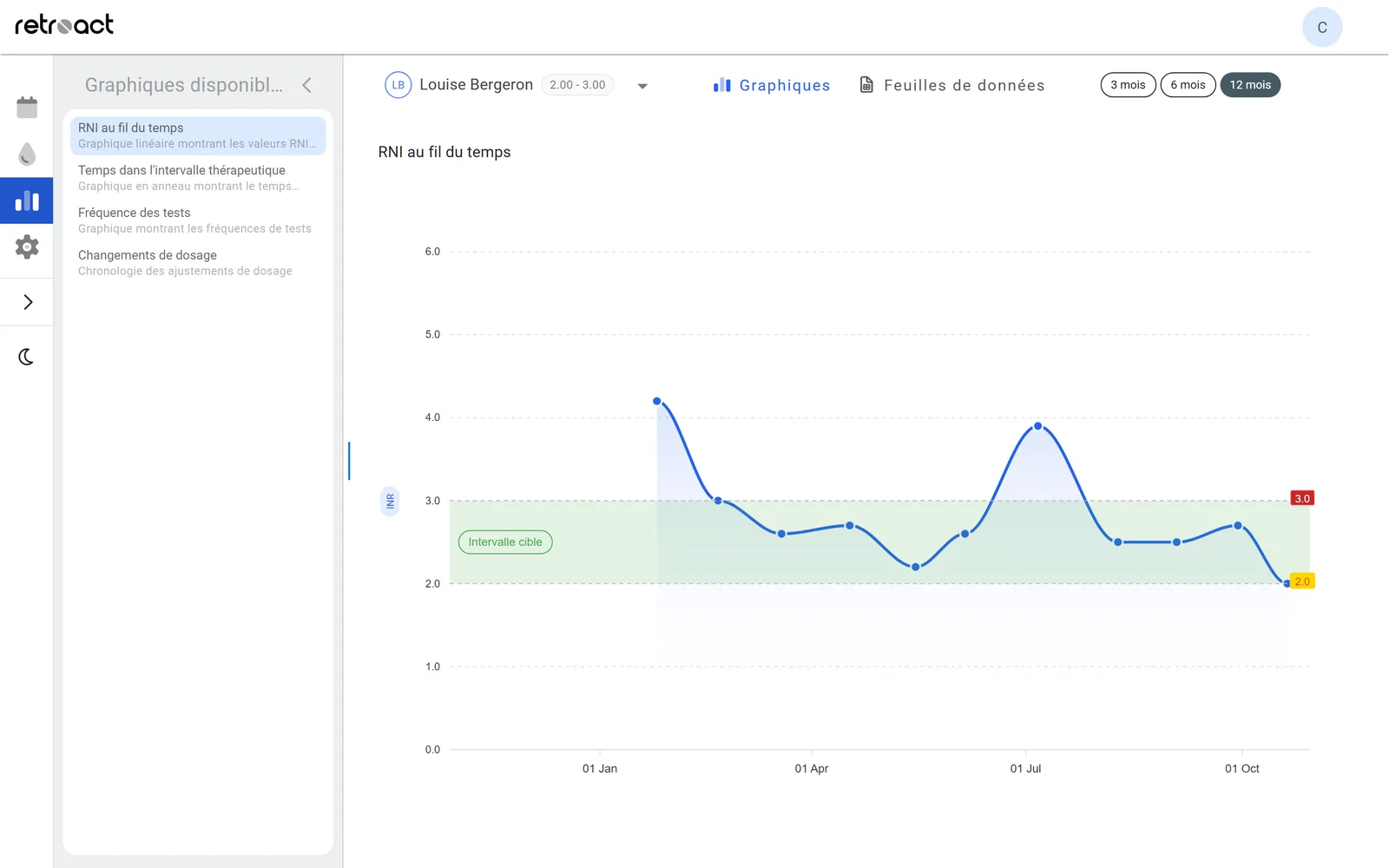
INR follow-up is a loop: a blood test, a result, a dose adjustment, the next visit. In most pharmacies that loop runs on paper and spreadsheets, and every adjustment is checked against a protocol by memory.
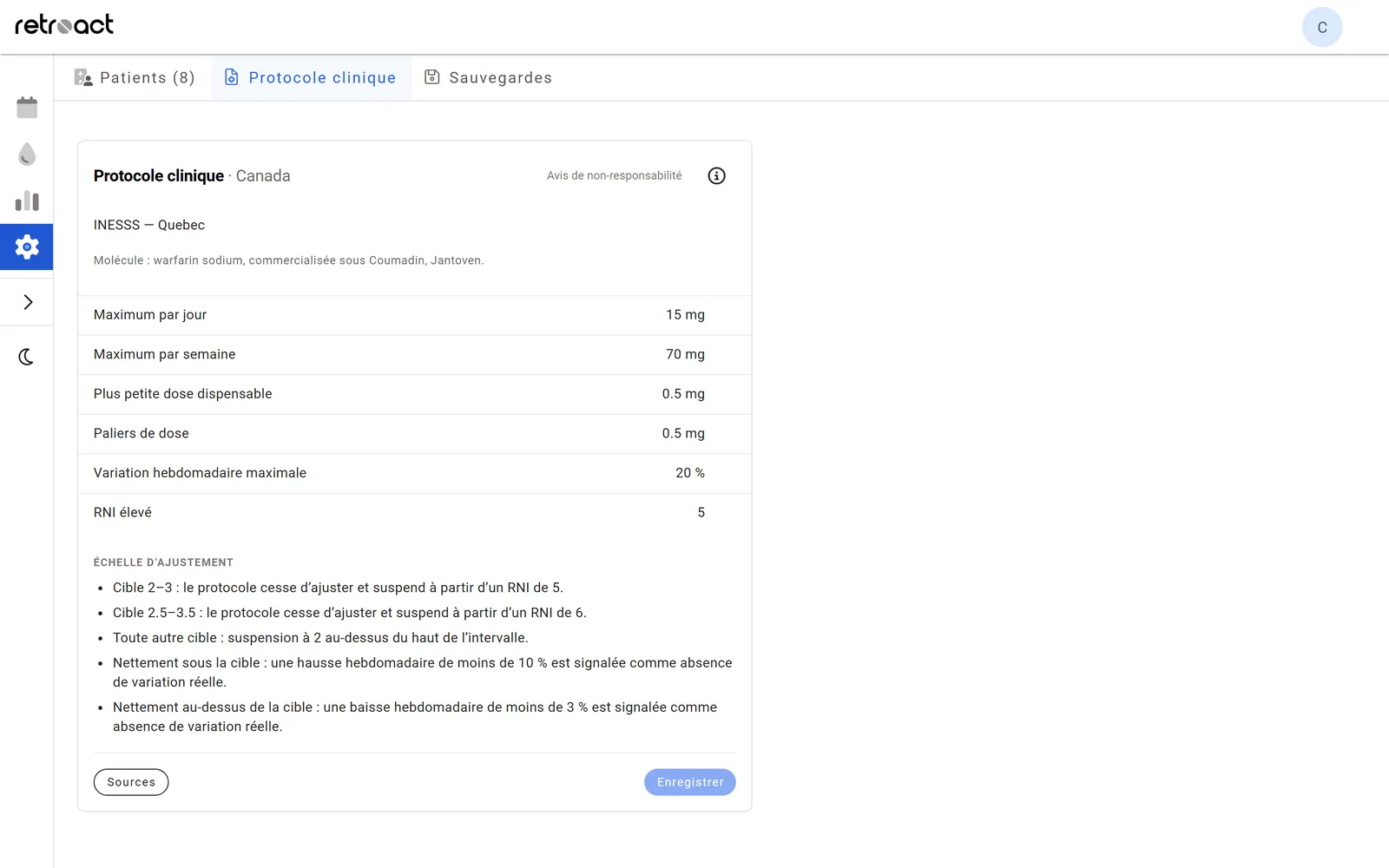
The protocol is precise (dose caps, target ranges, how much the weekly dose may change) and an error is a bleed or a clot.
What I did
- Analysed the INR follow-up process in community pharmacy, in clinic and in the lab, from the test result to the dose.
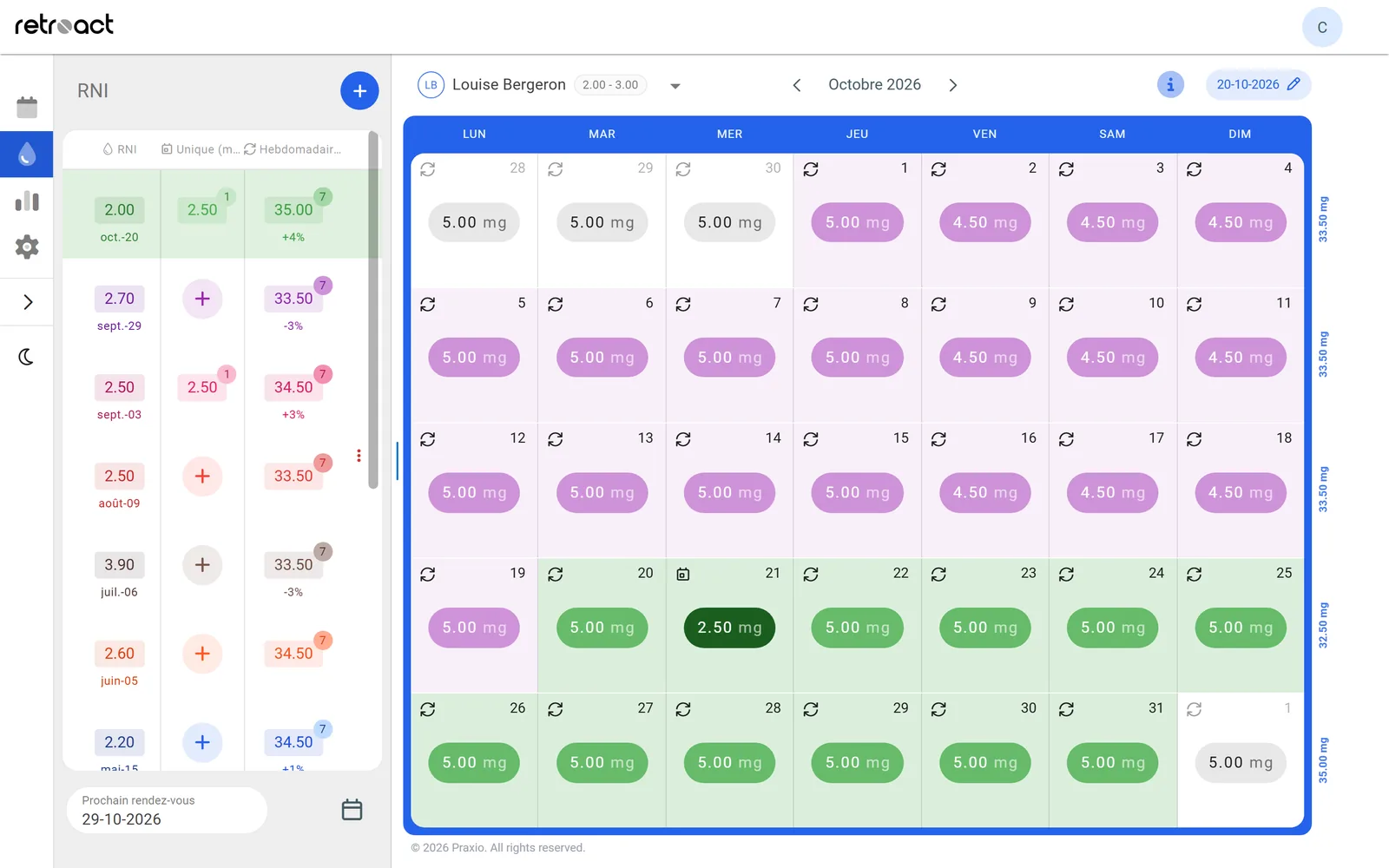
- Translated the clinical protocol into configurable business rules (dose caps, INR thresholds, maximum weekly variation) with every deviation flagged.
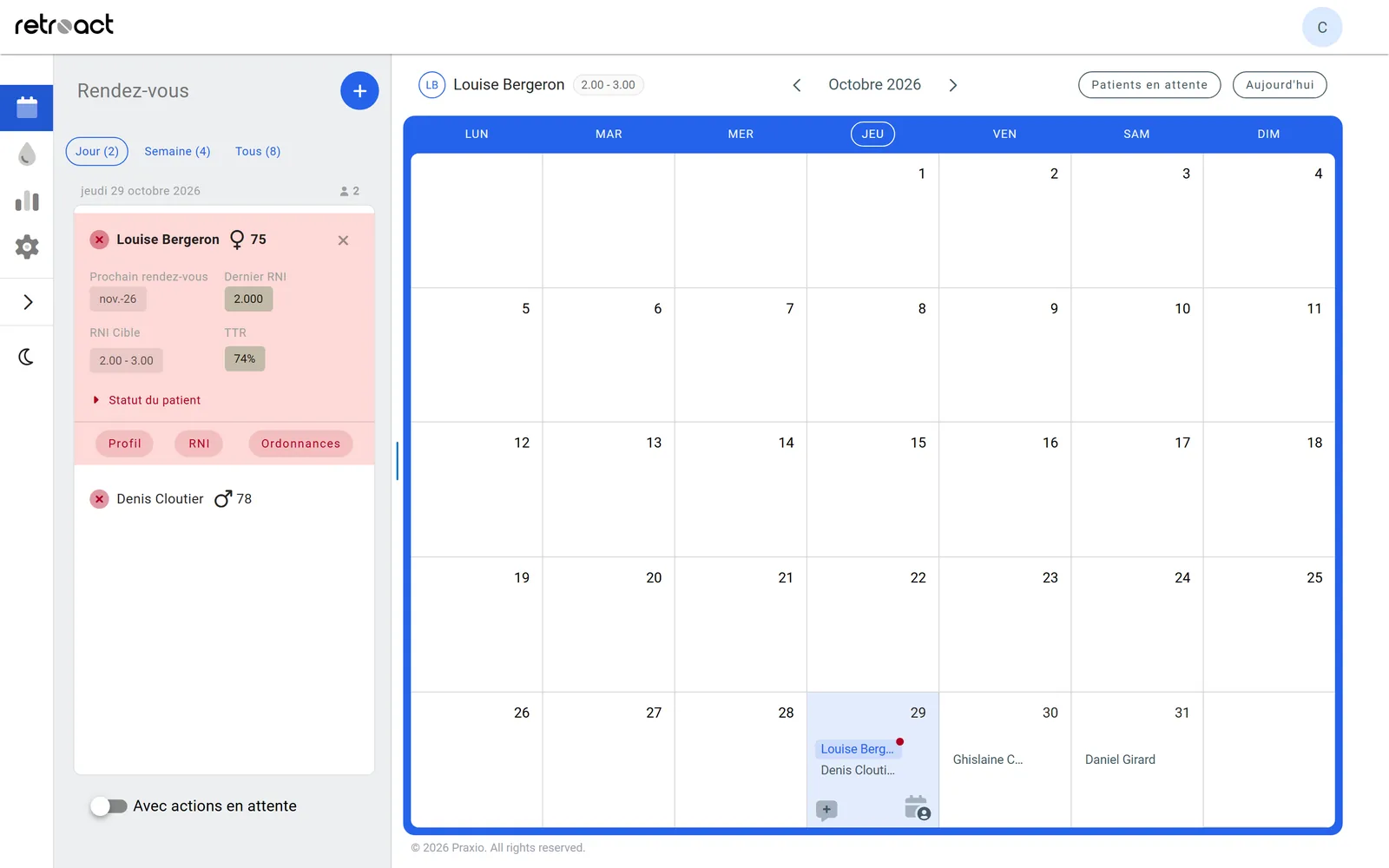
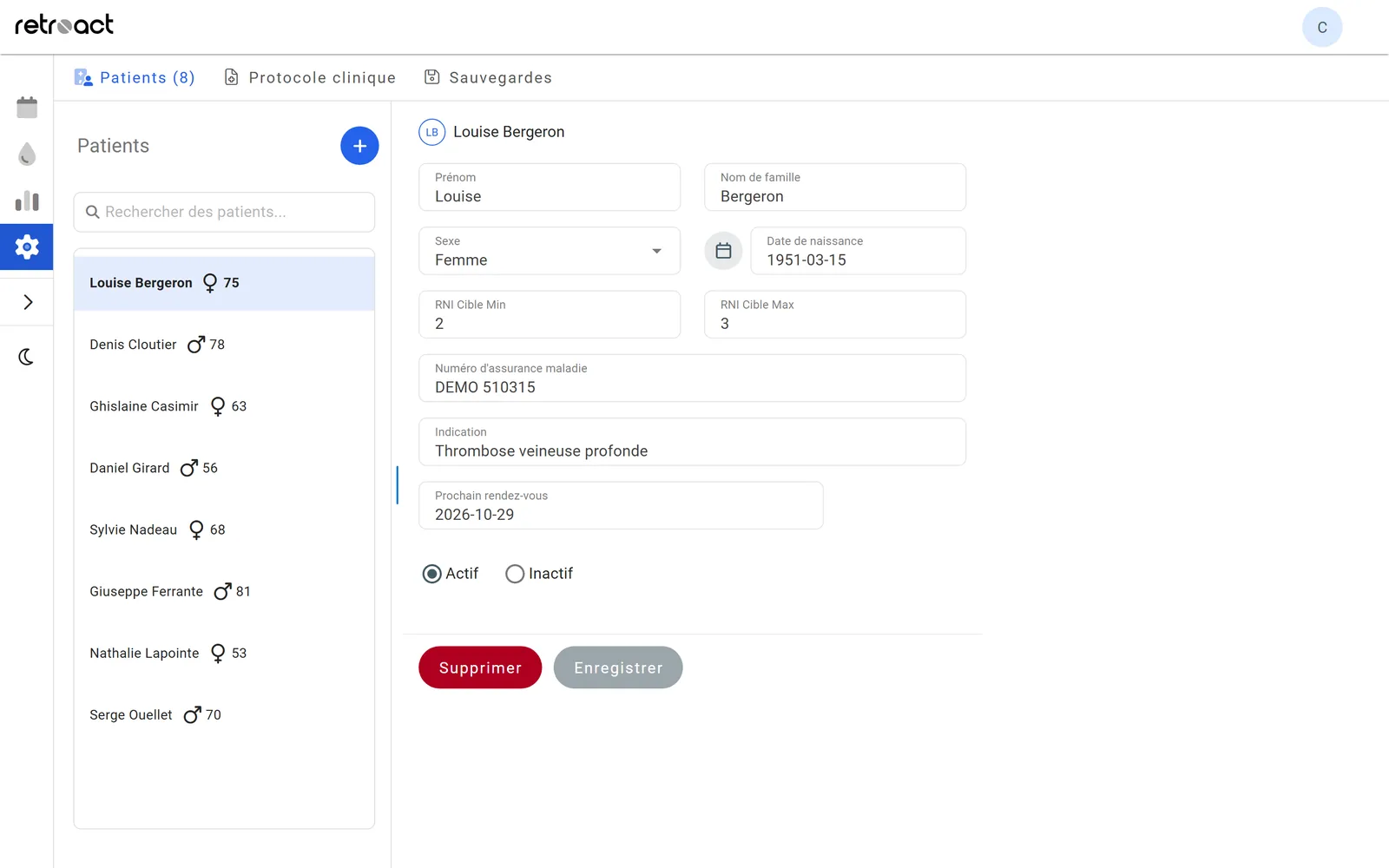
- Designed a six-screen web app: dosing calendars, prescriptions, visit planning, team accounts with read or edit rights.
- Gave each pharmacy the choice of cloud or local hosting, a full CSV export of its data, and an interface in seven languages.
The decision that mattered
Retroact never proposes a dose. It shows the protocol’s limits, checks the pharmacist’s dose against them and flags what falls outside, and the pharmacist decides.
That line is what makes the software usable in a regulated practice: the professional stays the decision-maker, and the tool makes every decision visible and checkable.
Screens